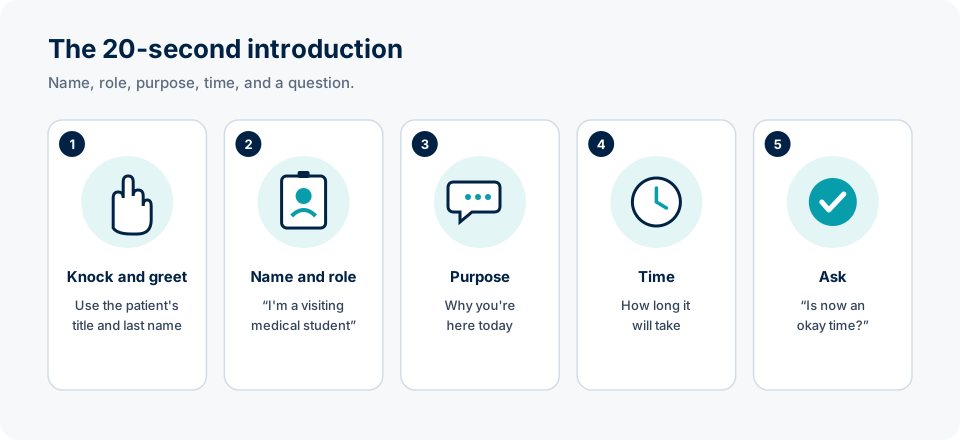
The introduction that builds trust
Knock, wait, enter, make eye contact, and say: “Good morning, Mrs. Garcia. I'm Ana Silva, a visiting medical student working with Dr. Patel's team. I'd like to ask you a few questions about your breathing; it'll take about ten minutes. Is now an okay time?”
Every element matters: your name, your role, the team, the purpose, the time and a question that gives the patient some control.
Your role, out loud, every time. Patients have the right to know who is caring for them. If you're a student, observer or extern, say so, and correct a patient who calls you “doctor.” Misrepresenting your role is a serious professionalism problem.
Names and titles
- Patients: use a title and last name (Mr., Ms., Mx., Dr.) until invited to use a first name. Ask “What would you like me to call you?” and how to pronounce their name. Ask about pronouns if you're unsure, respectfully.
- Attendings and senior physicians: “Dr. Lastname” unless they ask you to use their first name.
- Residents: many use first names among the team; follow their lead.
- Nurses and staff: learn and use their names. “Hey, nurse” lands badly.
Plain language
Health literacy is limited for many patients. Replace jargon with everyday words:
- “Myocardial infarction” becomes “heart attack.”
- “Benign” becomes “not cancer.”
- “NPO” becomes “nothing to eat or drink.”
Speak slowly, check pronunciation of drug names, and pause for questions. If your accent is strong, slow down and confirm understanding rather than speaking louder.
Body language and touch
Sit at eye level when you can, keep your phone away, and explain before you touch: “I'm going to listen to your lungs now; I'll put the stethoscope on your back.” For sensitive exams, a chaperone is offered or required by many institutions; follow your hospital's policy.
Key terms · tap to flip
Check your understanding
Knowledge check
Pick an answer to see the explanation. Get them all right to complete the lesson.
Part of the free MedRise US Clinical Etiquette & Communication for IMGs. Built on ACGME core competencies, AHRQ TeamSTEPPS, I-PASS handoffs and federal language-access rules.