Good Samaritan overdose laws
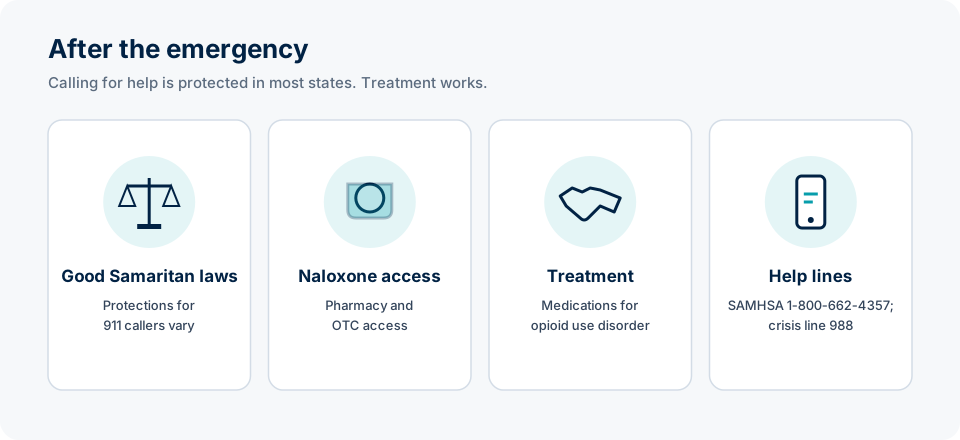
Fear of police is a common reason people don't call 911. Most states and the District of Columbia have passed overdose Good Samaritan laws that offer some protection from certain drug charges to people who seek help for an overdose and to the person who overdosed. What they cover, and the exceptions, vary a lot by state.
Texas: HB 1694 (the Jessica Sosa Act, effective September 1, 2021) added a defense to prosecution for possession of certain small amounts of controlled substances for people who request emergency help for a suspected overdose, and for the person who overdosed. It is a defense, not immunity, and it has exceptions: for example, it isn't available to people with certain prior drug convictions, people who have already used the defense, or people who called 911 for an overdose in the previous 18 months. This is general information, not legal advice.
The bottom line: call 911. Saving a life comes first, and in most states the law offers at least some protection to people who call.
Who may give naloxone
With nasal naloxone sold over the counter, anyone can buy and carry it. Most states also have laws that protect laypeople who give naloxone in good faith from civil liability. Health care workers follow their employer's policies and scope of practice.
After the overdose: connecting to care
- An overdose is a sign of high risk for another one. Encourage the person to get treatment.
- Medications for opioid use disorder (buprenorphine, methadone and extended-release naltrexone) are effective and reduce the risk of death. Buprenorphine can be prescribed by any clinician with a DEA registration that covers Schedule III drugs since the federal X-waiver ended in 2023.
- SAMHSA's National Helpline, 1-800-662-4357, offers free, confidential referrals 24/7. FindTreatment.gov lists treatment locations.
- For a mental health or suicidal crisis, call or text 988.
Words matter
Say “person who uses drugs” or “person with an opioid use disorder” rather than labels like “addict.” Stigma keeps people from seeking care.
Review
- Unresponsive and not breathing normally: give naloxone and call 911.
- Repeat every 2 to 3 minutes in the other nostril with a new device.
- Support breathing, recovery position, stay until EMS arrives.
- Naloxone is safe; myths are dangerous.
- Calling 911 is protected in most states; treatment works.
Key terms · tap to flip
Check your understanding
Knowledge check
Pick an answer to see the explanation. Get them all right to complete the lesson.
Part of the free MedRise Opioid Overdose Response & Naloxone Training. Built on the FDA-approved Narcan nasal spray label and CDC and SAMHSA overdose response guidance.