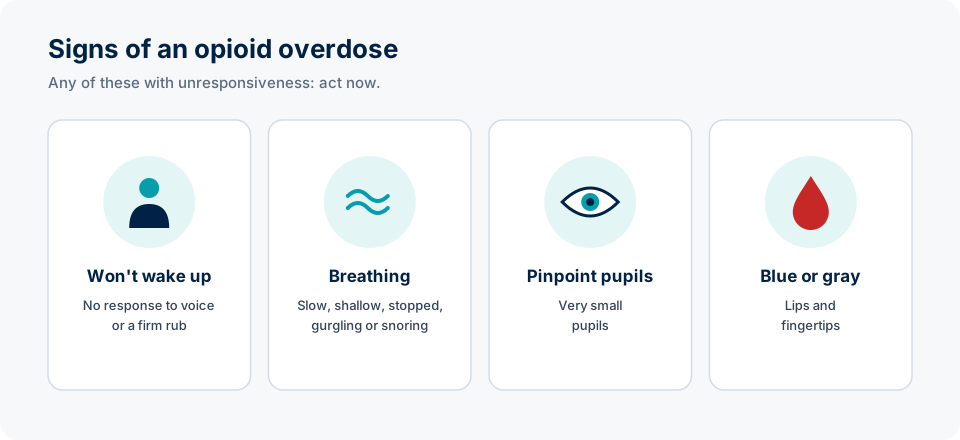
The signs
- Unresponsive: doesn't wake to their name shouted loudly or to a firm rub on the breastbone with your knuckles (sternal rub).
- Breathing: very slow, shallow, irregular or stopped; or gurgling, choking or deep snoring sounds.
- Pupils: very small, pinpoint pupils.
- Color: blue, purple or gray lips and fingertips; on darker skin, look at the lips, gums and nail beds, which may look gray or ashen.
- Body: limp, pale, clammy skin; slow or absent pulse.
High or overdose?
| Very high | Overdose |
|---|---|
| Sleepy but wakes when you shout or rub | Won't wake up |
| Can speak, even if slurred | Can't speak |
| Breathing normally | Slow, shallow, gurgling or no breathing |
| Normal skin color | Blue or gray lips and fingertips |
Someone who is very high can still slip into an overdose. Don't leave them alone; keep checking that they respond and breathe normally.
Check for a response
- Make sure the scene is safe for you.
- Shout their name and tell them you're going to give them naloxone.
- If no response, do a firm sternal rub with your knuckles.
- Look at their breathing and color.
When in doubt, give naloxone. If the person isn't responding and isn't breathing normally, give naloxone and call 911. It has no effect in someone without opioids in their system, and it's safe to give.
Other causes, like low blood sugar, stroke, head injury or other drugs, can look similar. Naloxone won't treat those, which is another reason 911 is always part of the response.
Key terms · tap to flip
Check your understanding
Knowledge check
Pick an answer to see the explanation. Get them all right to complete the lesson.
Part of the free MedRise Opioid Overdose Response & Naloxone Training. Built on the FDA-approved Narcan nasal spray label and CDC and SAMHSA overdose response guidance.